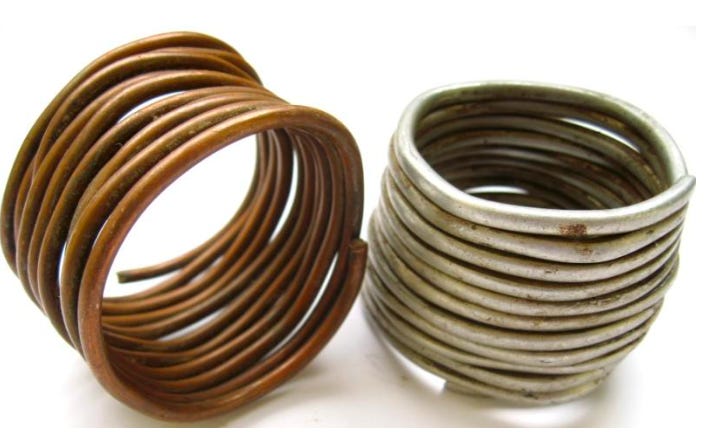
30 Million of Them. Then They Melted It All Down.
What a Manilla Is
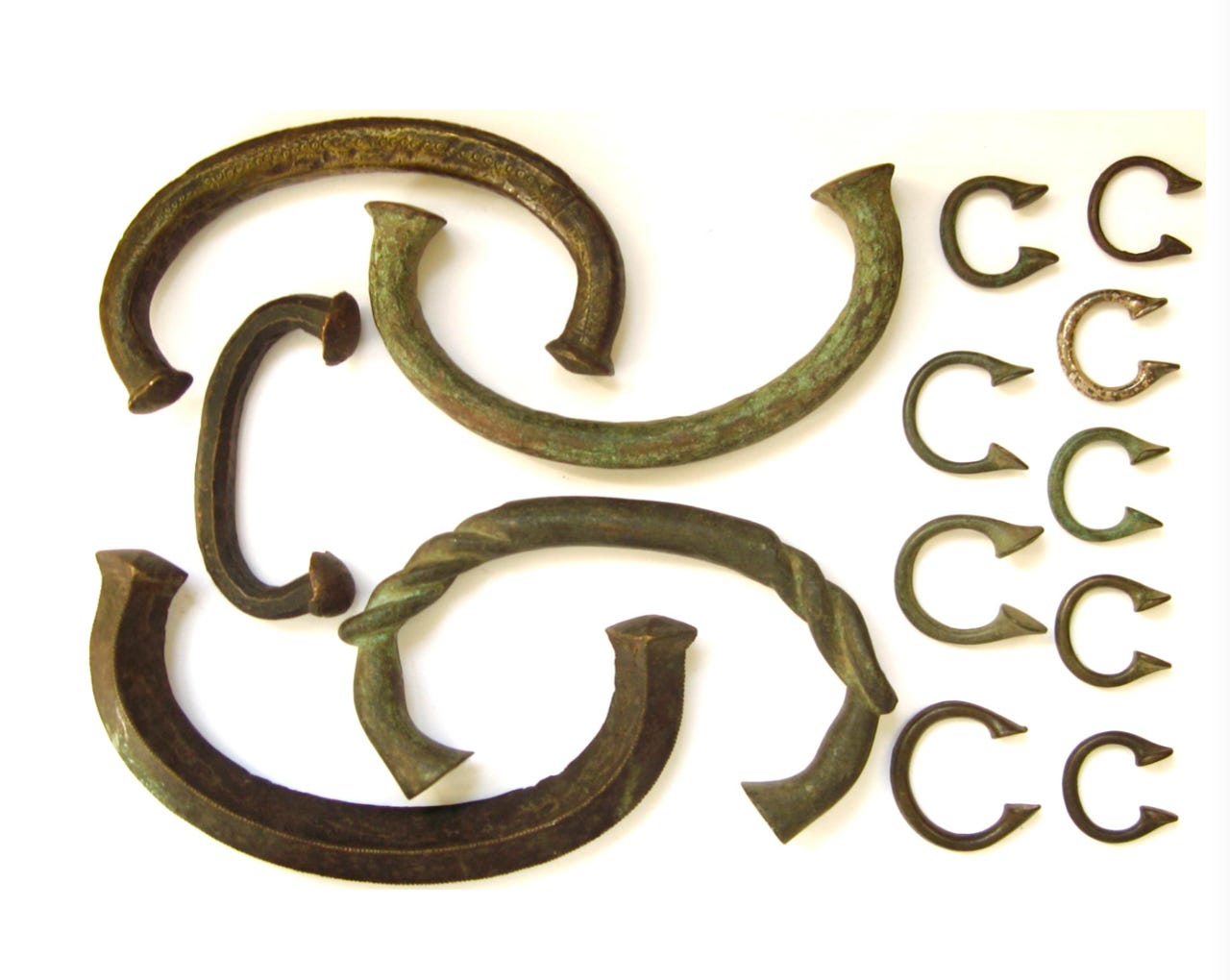
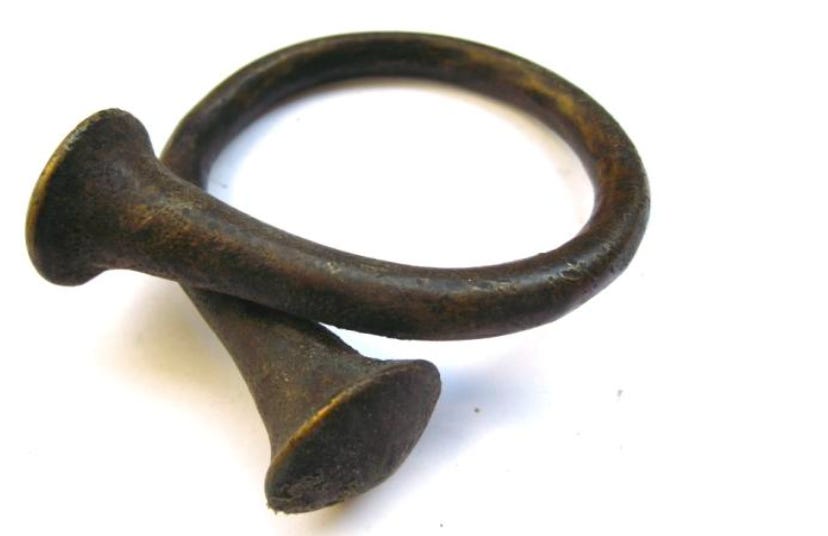
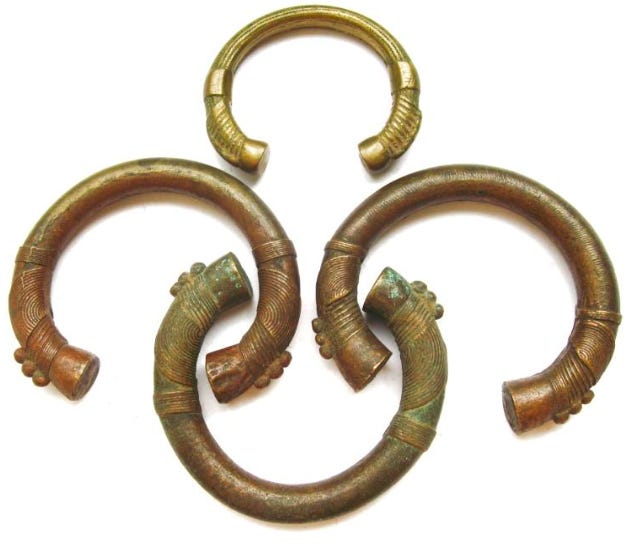
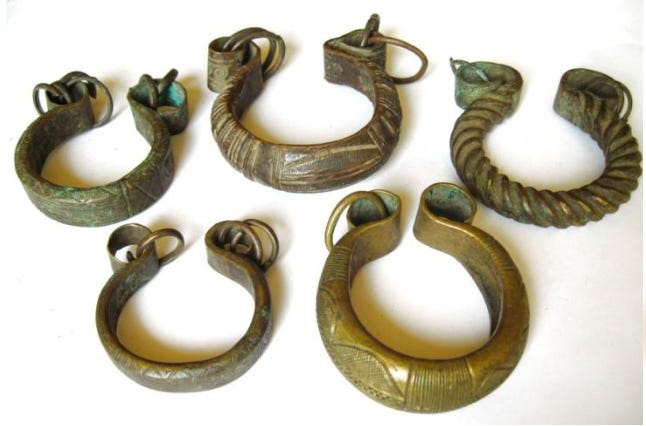
A manilla is a horseshoe-shaped metal ring, open at the bottom, thickened at the ends, designed to be worn on the wrist or arm. The word probably comes from the Portuguese manella, arm ring, from the Latin monile, neck ring. The Portuguese brought them to West Africa by sea in the 16th century, in enormous quantities, to use as payment. But manillas had already been arriving overland through the Sahara before that. The Portuguese didn’t invent the manilla economy. They industrialized it.
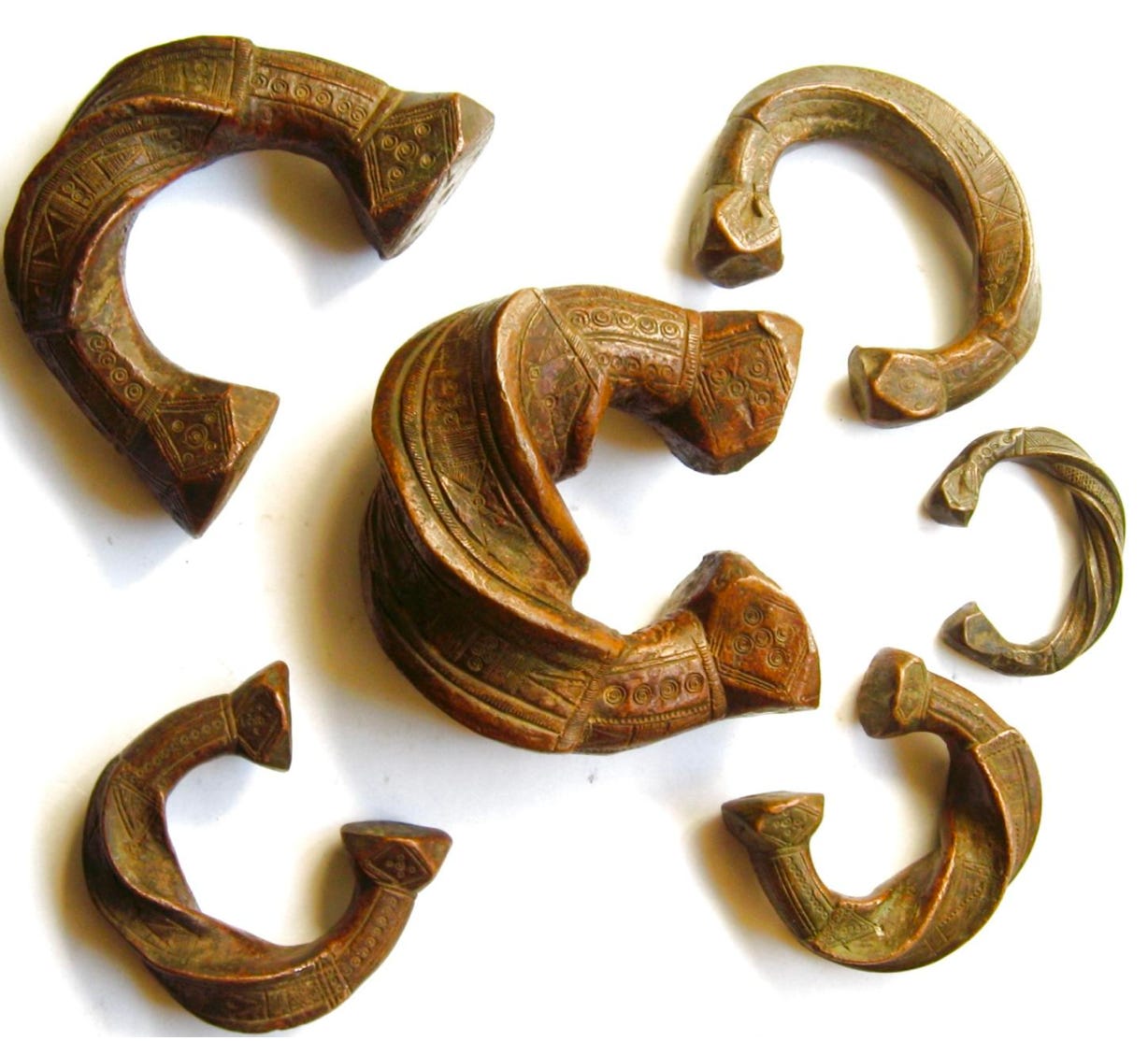
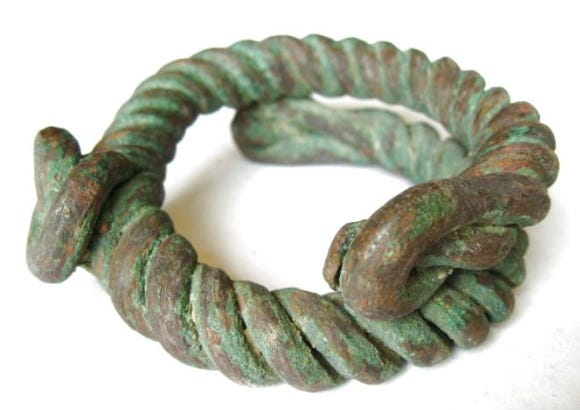
The collection holds 14 specimens totaling 7 kilograms, a range from small popo rings at 44 grams to the massive Mondua bars at over a kilogram each, decorated, twisted, used exclusively as high-denomination wealth. The Queen-size manilla was worth approximately 75 small ones. One Queen-size bought a slave couple, one man, one woman.
The Production Contract
In 1548, a contract was drawn up between the factor of the King of Portugal and the Fugger family, the great Augsburg banking dynasty, specifying that manillas were to be manufactured to exact patterns of form and weight. The Fuggers were producing African currency in Germany. It was a supply chain for colonialism, documented in a business contract, filed in an archive.
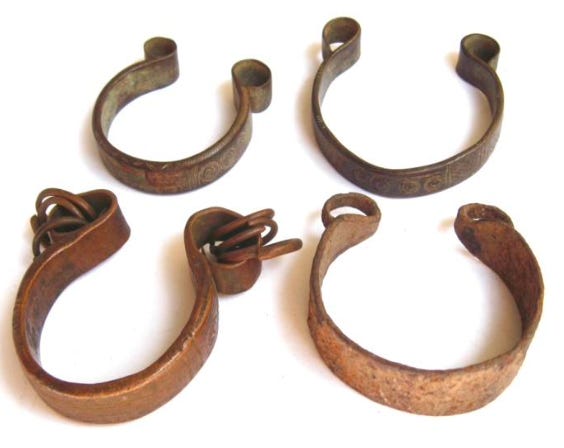
By the 17th century, the English had taken over. Birmingham manillas, flatter, with disk-shaped rather than club-shaped ends, became standard. They were made of copper mixed with lead, and the lead content fluctuated depending on the manufacturer’s greed: more lead meant cheaper production and lower quality. The Africans who received them knew. The sound of a manilla when struck was a quality test, and the English manufacturers knew this, so they tried to keep the ring tone consistent even as they degraded the metal.
1505: one good manilla bought an elephant tusk. 1505, 12 to 15 brass manillas bought a slave. By the inflationary peak, a slave cost 50. By 1940, one manilla bought a gourd of grain.
The End
In 1948, the British colonial government of Nigeria officially demonetized the manilla. They were declared no longer legal tender. Each Nigerian citizen was permitted to keep 200 pieces for ceremonial use. Everything else, approximately 30 million manillas, was collected and melted down.
A Nigerian postage stamp from 1953 commemorated the old currency with the caption: “Old Manilla Currency.” It depicted manillas of various sizes arranged decoratively. The stamp was worth three pennies, which was also, by then, roughly what a manilla had been worth at the end.
What Remains
The 14 pieces in the collection span four centuries and several national manufacturing traditions: Portuguese, French, Dutch, English, African. Each has a slightly different profile, a different alloy, a different weight. Together they are a material history of the Atlantic trade, the whole arc of it, from elephant tusk to stamp.
ASC | Object. Power. Culture. publishes weekly. The Alex Schütz Collection documents 2,210 pre-monetary payment objects from five continents.