
The Cross That Bought a Wife (and Sometimes a Slave)
Issue 01 · Tuesday | OBJECT OF THE WEEKOBJECT OF THE WEEK
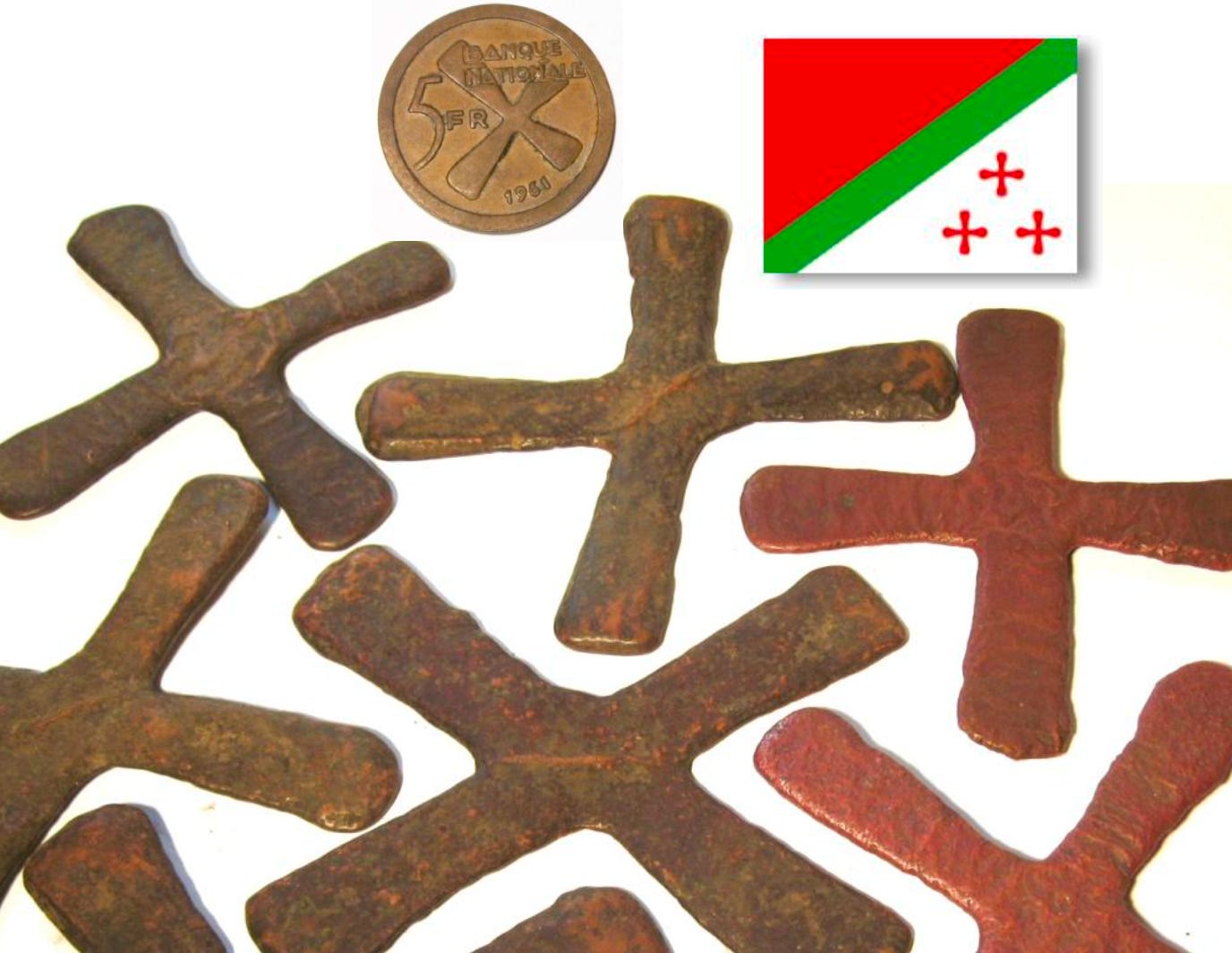
It weighs almost a kilogram. The copper is warm, warmer than you’d expect. The shape is elementary: a cross, but swollen, blunt at the ends, cast rather than hammered. Seven of these sit in the Alex Schütz Collection, the heaviest just over a kilo. To hold one is to understand immediately that it was not a convenience. It was a statement.
The Price of Things
In 1907, a Katanga cross bought a male slave. Three to five of them. A female slave cost one cross, the gender pay gap, inverted and made of copper, operating across central Africa during the final years before colonialism changed the rules of everything.
By 1924, the math had shifted. One cross bought ten kilograms of flour. Ten crosses bought a rifle. Inflation or deflation depending on which way you were moving, toward grain or toward guns.
A woman cost a large cross. But if she had, as the catalog puts it, “remarkable qualities,” you had to add a small cross on top. That qualifier has been sitting in the ethnographic literature since at least the 19th century, and it is impossible to read without a complicated feeling.
Origins: Copper from the Ground Up
The first Katanga crosses appeared in the 13th century, found in graves in what is now southern Katanga, buried alongside cowrie shells and glass beads. The dead went into the earth with their money. Already then, the cross was not only currency but insignia: a marker of dignity, of power, of belonging to a world where copper meant something.
By the 18th and 19th centuries, the crosses had become the tribute currency of the Lunda Empire, vast, sprawling across what is today Katanga, northern Zambia, and eastern Angola. Peripheral regions paid in crosses. The center accumulated them. It is a remarkably familiar logic.
The Weight of a Symbol
When Katanga briefly declared independence in 1960, three days after the Democratic Republic of Congo — it chose the cross as its emblem. The national bank of Katanga minted coins bearing its image. For three years, the ancient currency of the grave became the face of a modern state. Then it ended, absorbed back into the Congo. But the cross remained.
“Money is what does the money-work.”
Anonymous, cited in the catalog’s opening epigraph
Today the Katanga cross sits in ethnographic museums, private collections, and auction catalogs. It no longer buys flour or rifles or women with remarkable qualities. But it still does something. It still carries weight, literal and otherwise.
The Bigger Question
What makes a piece of copper a unit of exchange? Not the metal itself, copper is copper. Not the shape, which any smith could copy. It is the agreement: the shared belief that this object, here, now, between us, is worth something. The Katanga cross is a 700-year object lesson in the sociology of trust.
Next issue: the Handa, the cross’s smaller sibling, which multiplied so wildly it destroyed its own value. The first recorded inflation crisis in central African monetary history.
ASC | Object. Power. Culture. publishes twice weekly. The Alex Schütz Collection documents 2,210 pre-monetary payment objects from five continents.