
The Money That Rang. And Started Wars.
First: The Sound
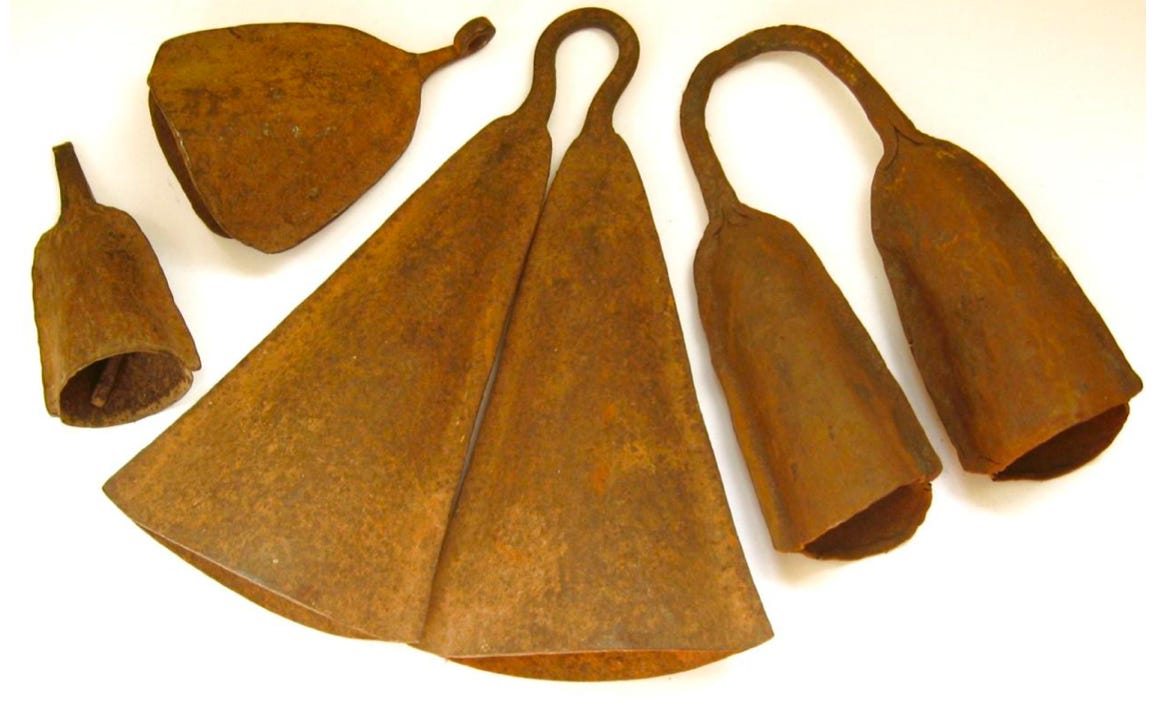
An Ngke is a double iron bell, two conjoined clapperless chambers, struck from the outside with a stick. The collection holds four, ranging from 178 grams to 1,633 grams. The largest is 35 centimeters tall. They were cast without internal clappers because the tone came from the metal wall itself, not from anything swinging inside. This was a deliberate sonic decision. The Ngke produced a specific pitch, and that pitch was meaningful.
Iron bells circulated as currency, status symbol, ritual instrument, and long-distance communication device simultaneously. They did not have to choose between these functions. In the forest regions between the Welle and the middle Congo River, a message sent by bell could travel faster than any messenger. The sound was money. The money had a voice.
The Exchange Rates
Five small Ngke bells: one pot of palm oil. One hundred small bells: one slave. One large bell: one woman, or two male slaves.
These prices come from the ethnographic literature of the late 19th century, at which point the Ngke economy was still functioning. The bell was not a metaphor for value. It was the value, weighed, assessed by tone quality, traded across long distances in the Congo basin by the Mobenge and Zande peoples and their neighbors as far north as the Bamum in Cameroon.
Wars were fought over iron bells. The catalog states this without elaboration, and the brevity is its own kind of emphasis. Not raids, not skirmishes, wars. Over money that rang.
The Dual Life of Sound
There is something worth pausing on here: a currency that was also a musical instrument, a ritual object, and a communications technology. Modern money has been systematically stripped of all these additional functions. A euro note does not make music. A dollar bill cannot send a message across a forest. The banknote is pure abstraction, a promise with no physical properties beyond its surface.
The Ngke is the opposite: an object so richly functional that separating its monetary role from its other roles is impossible. Its value as money and its value as a bell were the same value, experienced simultaneously. You could not hold one without hearing the potential of the other.
In the Collection
The four Ngke in the Alex Schütz Collection are silent now, obviously, or nearly. Strike the largest one and it still rings. The tone that carried messages through Congo forest in the 19th century is still in the iron. The wars it might have started are not. But the sound remains.
ASC | Object. Power. Culture. publishes weekly. The Alex Schütz Collection documents 2,210 pre-monetary payment objects from five continents.